The Annatto Seed Vat for both linen and wool.


Annatto Based natural dye on tissue lineen. The dress was an underdress for a 14th c. silk velvet 3 paneled dress. The dye bath was used on both the linen and wool (See Greenland for wool). The sleeves were left off on purpose so they didn’t bunch; however, the silk velvet was so hot, even in Alaska winters, that I forwent the underdress. It is now a three panelled dress that I keep forgetting I have for warmer weather. The sleeves are meant to be sown on so that they can be changed. I’ve not yet changed them either. I keep forgetting I have the dress but it’s drawback is that it is see-through in bright sunlight. Made in the summer of 2013. (Husky is not worn with dress but the fur does come free with every piece of garb I make).
The Yellow Greenland Dress


The same bath was used for wool. The wool was a terrible, terrible quality wool and the sizell (don’t know if I spelled that correctly) on the surface made dyeing it near impossible! Children take notes, use chemical gloves even with natural dyes. I ended up taking the pH so high the strip turned black before I even touched the dye bath. The result was chemical burns as I used Washing Soda left to long in the oven-when I made it. Lucky for me, there is documentation of a Greenland Dress, made with dyed yellow wool. The seams were so frayed I embroidered over just about everything. I’ll post the pattern pieces later. The yellow is not my colour but I spent a good 60 hours researching the dress and making it. I think it is #581 (I don’t have my books on me). The patterns in Woven Into the Earth are random in their sizing since there are multiple sizes. I created the first pattern on the recommended grid but then had to go forward in time to our basic Viking and then work backwards on the pattern. I don’t get many compliments on the dress-the colour sets people off; however, the colour of the dress is based upon a find in Greenland in which a yellow wool dress was found. Therefore, although I do not have the exact herb used to dye the dress, the colour is period. There are many herbs that provide a yellow dye-from dandylion flowers to calendula so I can only speculate. I dyed it myself, so I’ll stick to the yellow and treat it nice. In -40 degree weather though, it rocks in warmth!
Various Jewelry


Handmade jewelry and handmade beads for House of Fell Hounds Devices Tokens (I made the beads on the Viking Tokens, I’m not talented enough for the silver items.
How to Make a Dragon Boat


Viking Ships I designed and were then built by many contributors. I researched basically “how do you make a dragon” and created Dragon Heads out of paper-maché, then painted and mounted on large card-board rolls. I had some help and whist the Principality Coloured Dragon was created by me, a Young Adult created the Baronial Colours. The neck and design of the “Dragon Ship” was a Young Adult contribution. Shields designed and painted by Treasures. Entire ship was put together by members of the Populace…and a lot of coffee. The final product featured Royalty eating on a Viking Ship and the Court on another Viking Ship. The space was tight. Luckily, no one fell overboard. 🙂
Largess Contributions (some)


Largess provided to Prince Shawn, Princess Arabella and my own Largess. I made the beads after attending a Collegium. They are definitely rudimentary and not the best; however, they are my first. I do plan on revisiting many of my A & S and learning how to make glass beads (although clay is period) but “baroning” is more of a focus and I squeeze in A & S (not complaining!) but it does mean that I get to sample A&S and then go back and fine tune. Which is actually kind of nice.
The Velvet Pouch
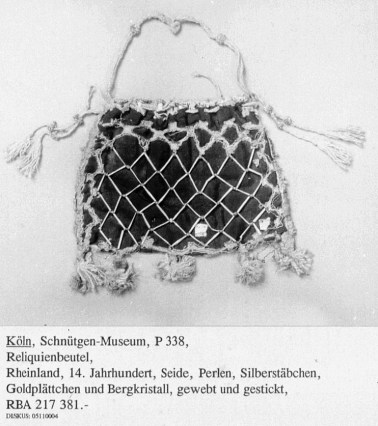
Pouch made for Viscountess Arabella, Principality of Oertha below. The pattern is based upon the museum pouch above. I altered the stitching so that instead of a beaded pouch with another material pouch inside, I did a split stitch using silver metallic thread, in a criss-cross pattern and then beaded the velvet. I marked the pattern with a base stitching first then embroidered it. On first glance, it looked terrible until I took out the base stitching. The metallic thread was challenging to work with and I had to beeswax the thread (helped a lot and I highly recommend this when using metallic thread), and then twist each stitch. The beads are silver beads from Russia which I ordered when I lived in TN about 15 years ago. I then lined the pouch with dupioni silk. I did not use silk velvet, although I have some, because mine is dyed with woad and I didn’t want it to be to delicate, so I used a rayon silk instead and made it wearable. The pouch took about 50 hours or more of embroidery and then I finished the beading within about 6. I hand stitched a velvet casing and stitched the cord inside the casing rather than running it through. I chose not to add the hanging trim on the bottom since I wasn’t sure how metallic would wear over time. The finished product below.


 GoddessFeedsTheRavens